How to Tell If Your Roof Was Damaged by Winter Weather
Winter in Nebraska can be hard on your home—especially your roof. Between heavy snowfall, freezing temperatures, ice buildup, and constant freeze-thaw cycles, winter weather can quietly cause damage that isn’t always obvious from the ground. As spring approaches, it’s important for homeowners to know what signs to look for before small issues turn into expensive repairs.
If you live in or around Beaver Crossing, here’s how to tell if your roof may have been damaged by winter weather and when it’s time to call a professional.
Why Winter Weather Is Tough on Roofs
Nebraska winters create a unique combination of stressors for roofing systems. Snow adds weight, ice prevents proper drainage, and fluctuating temperatures cause materials to expand and contract. Over time, these conditions can loosen shingles, crack flashing, and allow moisture to sneak into places it shouldn’t.
Even a roof that looked fine in the fall can develop problems by the end of winter—often without obvious leaks at first.
Signs Your Roof May Have Winter Damage
Missing, Loose, or Damaged Shingles
High winds, ice, and repeated freezing can cause shingles to crack, curl, or break loose. From the ground, look for:
- Shingles that appear uneven or lifted
- Bare or dark patches where shingles are missing
- Shingle granules collecting in gutters or near downspouts
Granule loss is especially important—it shortens the lifespan of your roof and reduces protection from UV and moisture.
Ice Dam Damage
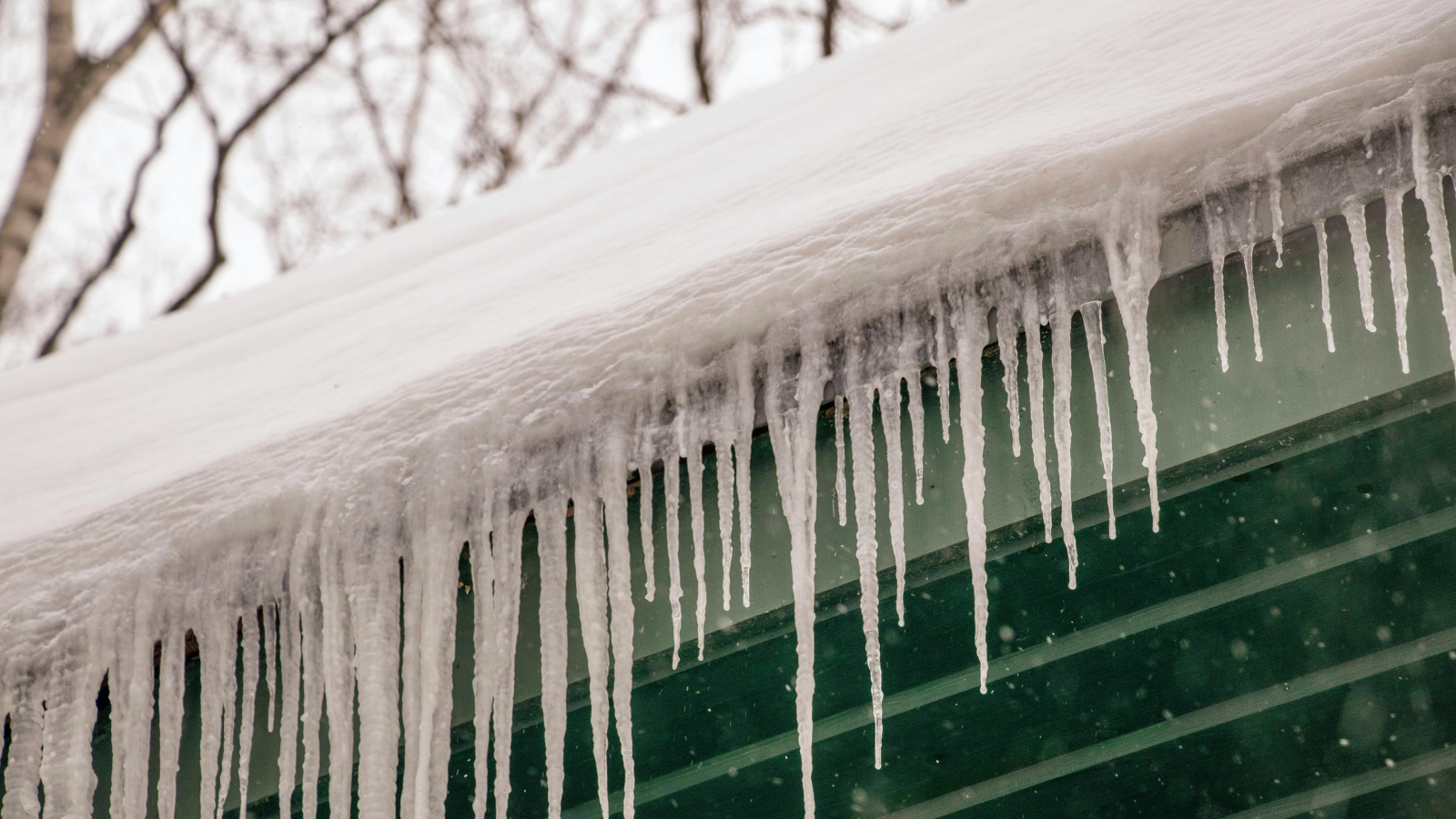
Ice dams form when heat escapes from your home, melting snow that refreezes near the roof’s edge. This ice buildup traps water, forcing it back under shingles.
Signs of ice dam damage include:
- Water stains on ceilings or walls
- Peeling paint near exterior walls
- Damp insulation in the attic
Ice dam damage often isn’t visible from outside, which is why professional inspections are critical.
Leaks or Water Stains Indoors
Sometimes the first sign of roof damage appears inside your home. Watch for:
- Brown or yellow stains on ceilings
- Dripping water during snowmelt
- Mold or musty smells in the attic
Winter-related leaks may show up weeks or even months after the damage occurs.
Sagging Roof Areas
Heavy snow accumulation can stress the roof structure. While modern roofs are designed to handle snow loads, prolonged weight or pre-existing structural issues can cause sagging.
If any section of your roof looks uneven or droops, it’s important to have it inspected immediately.
Damaged Flashing and Roof Penetrations
Flashing around chimneys, vents, and skylights expands and contracts during freeze-thaw cycles. Over time, this movement can loosen seals or crack metal flashing.
Damaged flashing is a common cause of slow leaks that worsen over time.
How to Safely Check for Roof Damage
You don’t need to climb onto your roof to spot potential issues.
A safe inspection includes:
- Walking around your home and checking the roofline
- Looking in gutters for shingle granules or debris
- Inspecting ceilings, walls, and attic spaces for moisture
Avoid climbing ladders or walking on icy or wet roofs—this can be dangerous and may cause additional damage.
When to Call a Professional Roofing Contractor
If you notice any of the warning signs above—or if your roof is more than 10 years old—it’s smart to schedule a professional inspection. Roofing experts know where to look for winter-specific damage and can identify problems that homeowners often miss.
Catching issues early can:
- Prevent costly structural repairs
- Extend the life of your roof
- Help with insurance documentation if a claim is needed
Preparing Your Roof for Spring
Late winter and early spring are ideal times to address roofing concerns. Repairs made now can prevent leaks during spring rains and summer storms. Even if your roof appears fine, a professional inspection offers peace of mind after a harsh winter.
Frequently Asked Questions About Winter Roof Damage
Can winter roof damage be covered by insurance?
In many cases, yes—especially if the damage was caused by storms, ice, or heavy snow. Coverage depends on your policy and the type of damage. Documentation from a professional inspection is helpful when filing a claim.
How soon should I inspect my roof after winter?
As soon as conditions are safe and temperatures begin to rise. Early inspections help catch hidden damage before spring weather makes it worse.
Do small leaks really matter?
Absolutely. Even minor leaks can lead to mold, insulation damage, and wood rot if left untreated.
Is ice dam damage preventable?
Improving attic insulation, ventilation, and sealing air leaks can reduce the risk of ice dams forming in future winters.
Need a Roof Inspection After Winter?
If you’re concerned about winter damage, Golden Rule Contractors can provide a thorough roof inspection and honest recommendations. Addressing problems early can save you time, stress, and money down the road.
RECENT POSTS